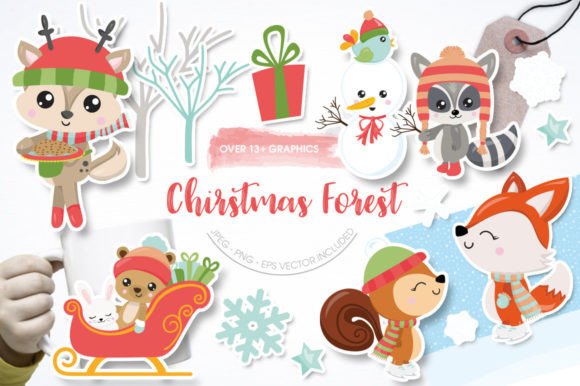
Christmas Forest Illustrations: A Designer's Review
When I first opened the Christmas Forest asset pack, my immediate thought wasn't just about the holiday season; it was about versatility. As a designer who constantly balances the whimsical needs of handmade businesses with the polished requirements of corporate branding, finding a graphic design asset that bridges that gap is rare. This collection of Illustrations brings a specific mood to the table—one that feels organic, slightly nostalgic, yet clean enough for modern application. It avoids the trap of looking like generic clipart, instead offering depth and texture that suggests a higher tier of creative design.
Setting the Mood for Seasonal Campaigns
The visual language of Christmas Forest leans heavily into natural elements. We aren't talking about neon Santas or cartoonish reindeer here. The style evokes a quiet winter evening, utilizing deep greens, soft whites, and earthy browns. For a recent project involving a boutique candle brand launching a limited-edition winter line, this aesthetic was exactly what the client needed. They wanted to convey warmth and tradition without feeling dated. The illustration styles within this pack provided the perfect foundation for their packaging design, allowing us to create a label that felt premium rather than playful.
For small business branding, especially those in the handmade business sector, emotional connection is everything. These assets help establish that connection instantly. Whether you are designing for an Etsy product launch or a local bakery's holiday menu, the mood set by Christmas Forest signals quality and care. It tells the customer that the brand values atmosphere and detail, which directly influences visual trust and audience engagement.
Real-World Application Across Media
In terms of utility, this digital product shines across various formats. I tested these elements in several scenarios to gauge their performance:
- Product Labels and Packaging: The detailed foliage works beautifully as a border or a corner accent on box designs. It adds a frame to the content without overwhelming the product name.
- Social Media Graphics: For Instagram stories and Pinterest pins, the assets provide instant thematic context. They serve as excellent background layers when opacity is reduced, creating a subtle texture behind text.
- Print-on-Demand Merchandise: If you are running a print-on-demand shop, these designs are ready for t-shirt design, tote bags, and mugs. The separation of elements allows for creative composition on different garment colors.
- Cricut and Vinyl Projects: For crafters using cutting machines, the clarity of the lines in these SVG design files ensures clean cuts for sticker design and holiday decals.
- Editorial and Web Design: In blog headers or newsletter graphics, the forest elements break up text blocks effectively, guiding the eye through the visual hierarchy of the page.
The strength of Christmas Forest lies in its adaptability. It functions well as a hero graphic on a landing page or as a delicate watermark on a wedding invitation suite that happens to fall in December. It supports the narrative of the project rather than stealing the show.
Strategic Placement and Limitations
However, professional judgment requires knowing when not to use an asset. While Christmas Forest is robust, it demands respect regarding scale and contrast. These illustrations contain fine details—tiny branches, subtle snow textures, and intricate leaf patterns. Consequently, they should be used carefully in small sizes. If you shrink them down for a favicon or a tiny footer icon, those details will muddy together, losing the crispness that makes them valuable.
Furthermore, avoid placing these assets over complex backgrounds. The organic shapes of the forest elements can get lost against busy photography or patterned textures. They perform best on solid colors, soft gradients, or ample white space. For projects requiring strict minimalist branding or very clean visual hierarchy, such as a tech startup's annual report, this pack might feel too decorative. It is tailored for warmth and character, not sterile professionalism.
Readability is another critical factor. When using these elements near typography, ensure there is sufficient breathing room. Crowding text against the dense parts of the forest illustration creates visual noise, making the copy hard to scan. Always prioritize the legibility of your message over the decoration.
Technical Considerations for Commercial Use
Before integrating Christmas Forest into a final client deliverable, there are several technical checks every designer should perform. First, test the assets in black and white. This reveals whether the contrast holds up if the client decides to print on a single-color stock or needs a monochrome version for faxed documents or newspaper ads.
Next, inspect the file formats thoroughly. If you are working with a Canva template, ensure the PNG files have true transparency so they don't leave ugly white boxes around the trees. For vector-based work, check the SVG or EPS files for clean anchor points. Messy vectors can cause issues when scaling up for large format printing, like billboards or trade show banners. You want smooth curves, not jagged edges.
Typography pairing is also essential. These nature-inspired illustrations pair wonderfully with serif fonts that echo traditional print, or handwritten fonts that mimic personal notes. However, they can also create an interesting juxtaposition with bold, modern sans-serif fonts, grounding the starkness of the type with organic softness. Avoid pairing them with overly decorative display fonts, as the competition for attention will confuse the viewer.
Final Verdict on Value and Licensing
Ultimately, Christmas Forest is a high-value addition to any designer's toolkit, particularly for those serving the holiday market. It elevates marketing visuals from standard to standout. For digital sellers and content creators, it offers a quick way to produce cohesive themed collections without spending hours drawing from scratch.
One final, crucial reminder: always review the commercial license. Whether you are using this for a client's logo design or selling it as part of your own design bundle, understanding the rights is non-negotiable. Ensure the license covers your specific use case, whether it's unlimited prints for physical goods or digital distribution for web assets. When used correctly and ethically, this creative marketplace find can significantly streamline your workflow while delivering a polished, professional result that clients will love.